Published Oct 19, 2026
5 minute read

At a glance
Facial aging is not just a surface problem. It happens in two places at once. The skin itself changes in texture and tone, and underneath it the bone, the pads of fat and the collagen holding everything together all shift. That is why skin can be in good condition and a face still look tired, and why no single treatment covers all of it.
Most people arrive pointing at a line, and the honest answer is usually that the line is not the problem. If your skin is in decent condition and you still look drawn in photographs, what has changed is the structure underneath it. Knowing which layer has moved is what separates a treatment that works from one that quietly disappoints you.
What Actually Holds Your Face Up?
Your face is built in layers. Bone at the base, pads of fat above it, and collagen holding the arrangement in place. Each one leans on the others, so when one gives way the result shows up as shadow and flatness rather than as a crease.
Start at the bottom. The bone underneath is not fixed for life. The eye sockets widen a little, the cheekbone flattens, and the jaw loses some of its edge. In absolute terms the change is small. Visually it is not, because everything above is resting on that shape.
Above the bone sit pads of fat, and they are not spread evenly the way fat is elsewhere on the body. They sit in separate compartments, around the eyes, across the cheeks, along the jaw. Over time they both shrink and slide downward. Fullness that used to sit high on the cheek ends up lower, which is how you get a hollow in one place and heaviness in another at the same time.
Holding all of it together is collagen, which keeps skin firm and anchored to what is beneath it. Production slows from your twenties onward. Nothing fails suddenly. The scaffolding just gets slacker, so skin that once lay tight over bone and fat begins to drape.
Why Do Temples and Cheeks Go First?
They have the least padding to lose. There is very little between skin and bone at the temple, so even a small reduction reads as a shadow, and a shadow there is what makes a rested face look tired to everyone but you.
Temples are the clearest example. Unlike the cheek, which has real padding, the temple has almost nothing between the surface and the skull. Lose a little and it shows as a soft dent that catches the light the wrong way. People around you read it as fatigue, which is why the comments tend to be about looking tired rather than looking older.
The Shape Your Eye Is Actually Reading
A younger face is widest across the cheekbones and narrows toward the chin. As the temples and upper cheeks empty out and the lower face carries more, that proportion flips. The eye reads the new shape as age long before it registers any individual line, and that is the part no amount of surface work changes.
Why Does Good Skincare Not Fix It?
Because skincare works at the surface and hollowing does not start there. A good routine improves texture, tone and hydration, all of which matter. It cannot replace fat that has moved or rebuild support beneath the skin, because it never reaches that depth.
Even a well-formulated product acts on the outer layers. The support that has thinned sits deeper, the fat sits deeper still, and bone is beyond the reach of anything you can apply. This is not a comment on product quality. It is a question of how far a cream can travel.
None of which is an argument against looking after your skin, and it is where surface treatments genuinely earn their place. Our Aerolase laser treatments even out tone, calm redness and lift dullness, and microneedling improves texture and firmness closer to the surface. Skin in good condition reflects light better and sits better over whatever is underneath it. The mistake is asking it to do a structural job.
Consultation
Not sure which layer has actually changed on your face? That is what a consultation is for. Current offers are on our specials page.
Book Your Appointment Call (303) 901-1867Which Treatment Answers Which Change?
Four different changes, four different answers. Movement etched into skin, volume that has gone, support that has slackened, and surface tone are separate problems, and matching them properly is most of what a good consultation does.

This is the part worth slowing down for, because it is where money gets wasted. A treatment aimed at the wrong layer does not fail dramatically. It just underdelivers, and you conclude the treatment does not work when in truth it was never the one you needed.
| What has changed | How it shows up | What addresses it |
|---|---|---|
| Muscle movement | Lines still visible when your face is still | Botox |
| Volume that has gone | Flatter cheeks, hollow temples, a softer jawline | Dermal fillers |
| Support that has thinned | Slackness overall rather than one hollow | Collagen stimulators |
| Surface tone and texture | Dullness, redness, sun damage | Laser treatments |
In practice these overlap. Botox softens the lines movement has etched in, and it does nothing at all for a flat cheek. Dermal fillers restore volume where it has gone, and they will not change your skin tone. Collagen stimulators such as Sculptra and Radiesse work on the support itself, slowly, which is a different proposition again. Most faces need two of these rather than four, and which two is the entire question. Our injectables and fillers menu groups them the same way.
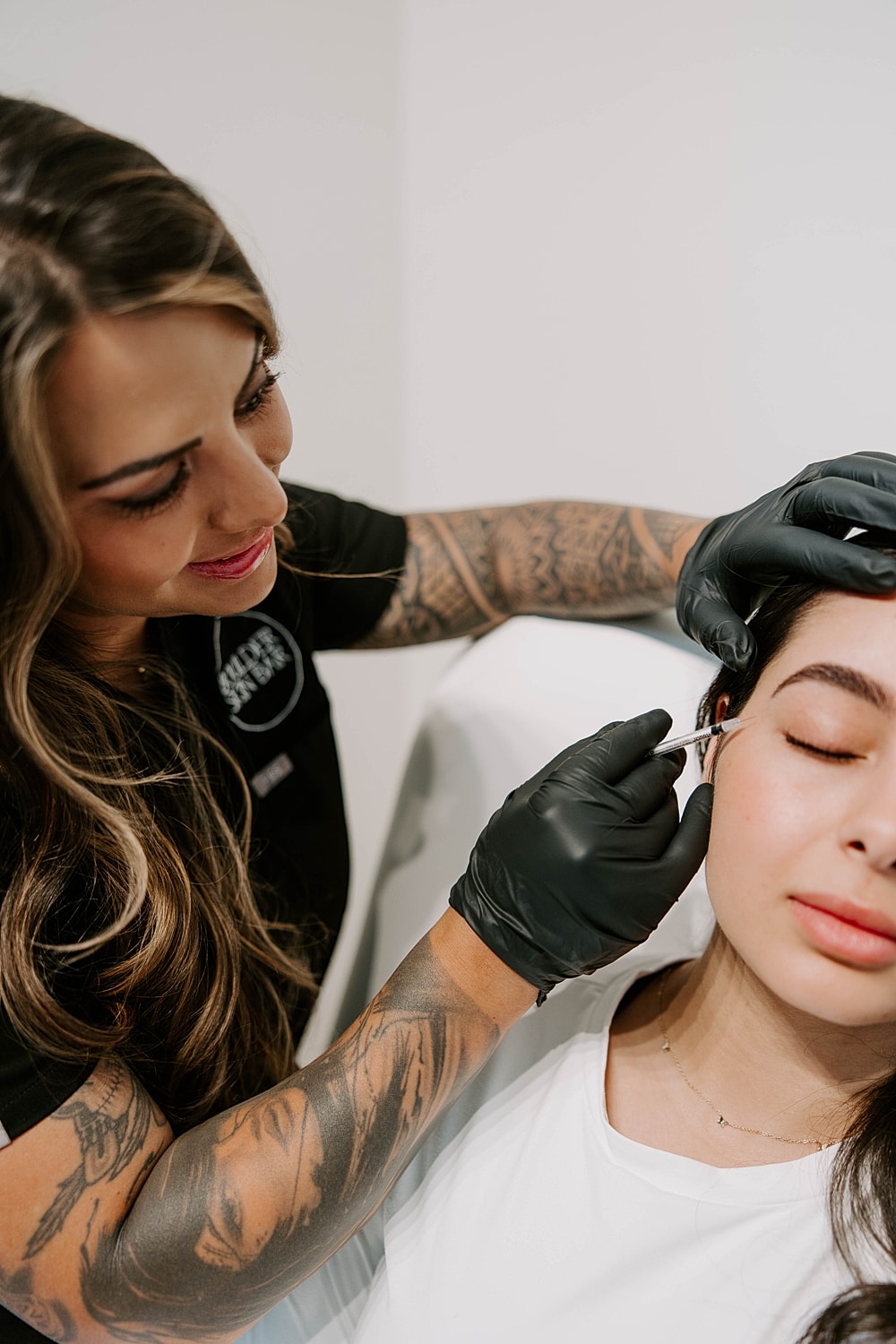
You can see the kind of change this makes in our before and after gallery. The judgement about which layer to treat first, and how much, is made in the treatment room by Brittany Guerrero, our Lead Injector. That judgement is the part that matters most. The same product in different hands does not give the same result.
What Should You Expect Before You Book?
Expect a plan rather than a product. A good consultation works out which layer has changed most, what order to address it in, and what is realistic for your face. Anyone offering a single fix for all of it is overselling.
Be wary of a result promised in advance. Outcomes vary because starting points vary, and your age, skin quality, anatomy and how you look after yourself all feed into it. What a provider can tell you honestly is which changes are addressable, roughly what sort of difference to expect, and what will not shift.
It is also worth knowing that none of this stops aging. It addresses what has already changed. Maintenance is part of the arrangement rather than a sign that something went wrong, and a plan that accounts for it from the start is a better plan than one that does not.
And if lips are the thing on your mind rather than structure, that is a different conversation. We have written about how to choose a lip filler separately.
Source
Mendelson B, Wong CH. Changes in the Facial Skeleton with Aging: Implications and Clinical Applications in Facial Rejuvenation. Aesthetic Plastic Surgery, August 2012. This article is educational and is not a substitute for a consultation with a licensed provider.
FAQs
Because the two are different things. Skin quality is about the surface: texture, tone and hydration. Hollowing is about what the surface is sitting on. You can have smooth, well-cared-for skin and still look drawn, because the bone, fat and support underneath have changed shape.
Yes, and it surprises most people. The eye sockets widen slightly, the cheekbone flattens and the jawline softens over the years. The amount is small, but everything above is resting on that shape, so a small change underneath shows up clearly on the surface.
No. They can genuinely improve how skin looks and feels, which is worth doing. They cannot replace fat that has moved or rebuild support below the skin, because nothing you apply to the surface reaches that depth. Expecting it to leads to a lot of wasted money.
It depends on whether the area has lost volume in one spot or support more broadly. Filler restores volume where it has gone. A collagen stimulator works on the support itself over several months. Which one suits you is a judgement made at a consultation, on your face, not from a photograph.
It depends entirely which route you take. Treatments that add volume show on the day. Treatments that work by building your own collagen take months and arrive gradually. Neither is better. They answer different questions, and the right one depends on what has actually changed.