Published Oct 19, 2026
5 minute read

At a glance
Sculptra is not a filler. It is a collagen biostimulator, which means it prompts your own skin to rebuild its support rather than adding gel to sit in place. The change arrives over three to six months, across a short series of appointments. You will not leave looking different on the day, and for most people that is exactly the appeal.
Most people arrive asking which filler will fix a flattening cheek or a softening jawline. It is a fair question, and for plenty of faces a filler is the right answer. But when what has changed is the support underneath rather than one line or hollow, adding volume at the surface treats the symptom. Sculptra works the other way round, which is why our injectables and fillers menu groups it with the biostimulators rather than the hyaluronic acid gels.
How Does Sculptra Actually Work?
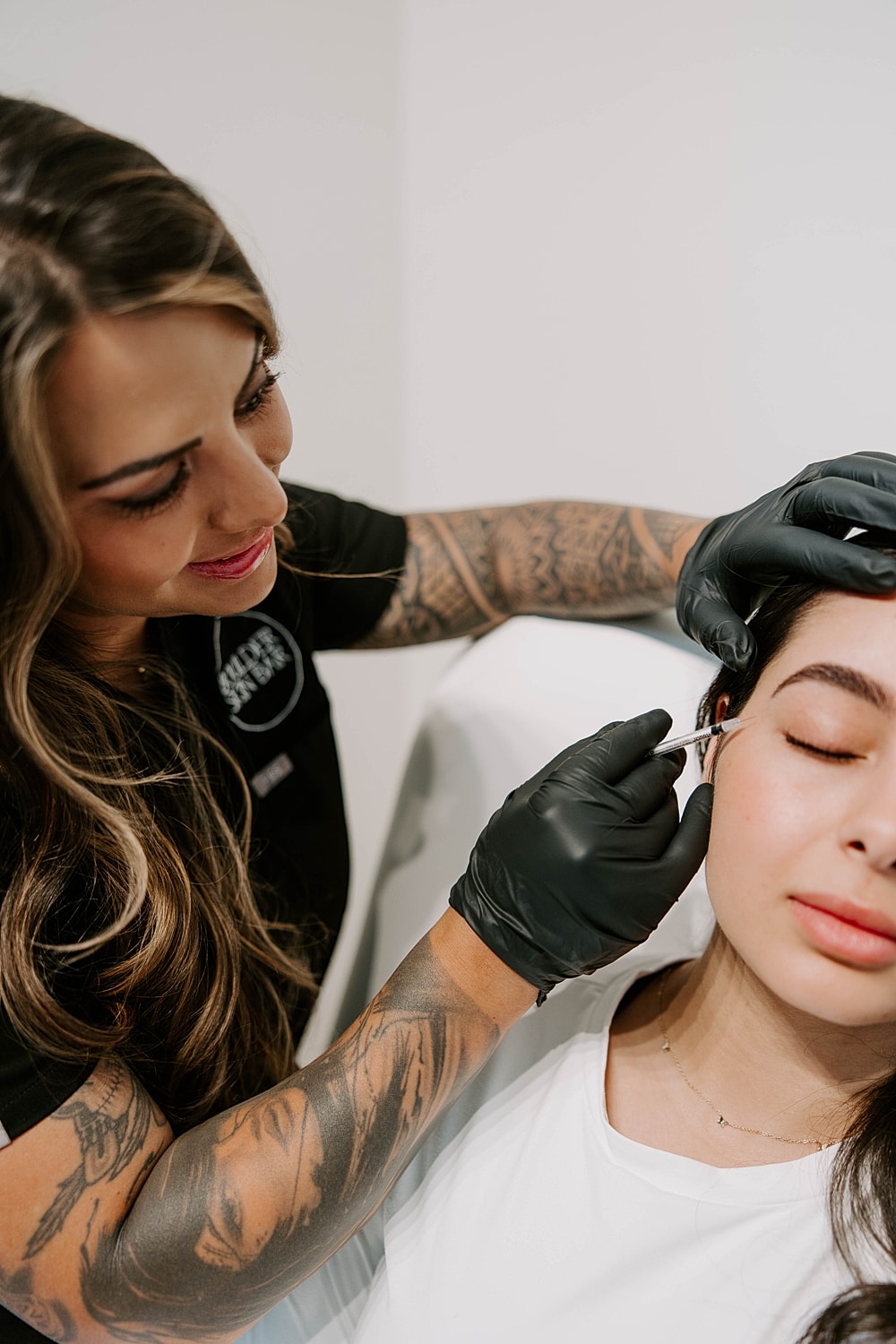
Sculptra is a liquid made from the same material surgeons have used in dissolving stitches for decades. Placed in the deeper layer of your skin, it gives the cells that build collagen something to work around. Over the following months those cells lay down new collagen, and the material itself quietly dissolves.
Very little happens on the day, and it helps to know that in advance. There is usually some puffiness from the fluid itself, which settles within a few days. That early fullness is not your result, which is worth holding on to, because people often mistake it for the treatment working and then for it wearing off.
What is actually happening is slower and much quieter. Your skin treats the material as something to build around, and the structure that forms afterwards is your own tissue rather than a product holding a shape.
Why It Takes More Than One Appointment
There is a limit to how much collagen your skin will build at once, so the work is done in layers. Most plans run to two or three sessions spaced about four to six weeks apart, each one adding to the last. Your provider maps that to your face at the consultation rather than to a standard protocol, because how much support you have lost and where you have lost it differs from the next person.
Why Do Sculptra Results Take Months?
Because you are growing the result rather than placing it, and collagen forms at the pace your skin sets. Most people see the change somewhere between three and six months. Some notice it by the second month, others not until the fourth. Both are normal, and neither predicts the final result.
This is the part we would rather be blunt about before you book than apologise for afterwards. If you have a wedding in three weeks, Sculptra is the wrong tool and we will say so. Nothing in the technique speeds the timeline up, and a provider who promises otherwise is promising something your skin does not do.
The flip side is the reason people choose it. A change that arrives over months does not announce itself. Friends tend to say you look well, or rested, rather than asking what you have had done, because what they are seeing is your own face with its support rebuilt, not a product sitting on top of it.
How Is Sculptra Different From a Filler?
A hyaluronic acid filler adds volume and holds it, and you see it the same day. Radiesse does both jobs, adding volume now and building collagen later. Sculptra only does the slow half. That makes it the most patient of the three and, for broad structural change, often the most natural-looking.
The three sit on a spectrum rather than in competition. If you want to understand the middle of it, our post on what Radiesse is and how it builds collagen covers the one that does both at once.
| Hyaluronic acid fillers | Radiesse | Sculptra | |
|---|---|---|---|
| What it does | Adds volume and holds it | Adds volume, then builds collagen | Builds collagen only |
| When you see it | Same day | Same day, then more over months | Three to six months |
| Can it be reversed? | Yes | No | No |
| Usual number of visits | One | One | Two or three, spaced weeks apart |
| Best for | Lips, fine lines, softness | Cheeks, jawline and neck, for structure | Broad support across temples and cheeks |
None of the three is better than the others. They answer different questions, and a sensible plan often uses more than one. Sculptra is also not a lip treatment. Lips are done with a product chosen to stay soft and move naturally, which is a different job entirely.
Consultation
Not sure whether the change you are seeing is something Sculptra would help? That is what a consultation is for. Current offers are on our specials page.
Book Your Appointment Call (303) 901-1867Who Is Sculptra Right For?
People whose faces have lost support broadly rather than in one spot, who are comfortable waiting a few months, and who would rather look gradually better than suddenly different. It suits early and moderate change better than advanced sagging.

The usual signs are temples that have hollowed, cheeks that look flatter in photographs than they feel, or filler that does not seem to go as far as it once did. All three point to support that has thinned underneath, which is the thing Sculptra is built to address.
When Something Else Would Serve You Better
If you want a result for a date in the diary, a dermal filler gets you there and Sculptra will not. If what bothers you is surface texture, pigment or fine lines rather than structure, that is a different set of treatments. And where skin has genuinely loosened rather than lost volume, an injectable of any kind is being asked to do something it cannot. We would rather tell you that at the consultation than three months in.
What Should You Expect Before and After?
Expect a short appointment, some puffiness for a few days, and very little to look at for a while. Expect to come back once or twice. And expect the result to be a version of your own face rather than a noticeably treated one.
Tenderness, mild swelling and the odd bruise at the injection points are the common after-effects, and they usually settle within a week. Rarer reactions exist, as with any injectable, which is why Sculptra should only ever be placed by a licensed, appropriately trained provider. Where it goes and how it is spread is most of the result, and that part happens in the treatment room.
What is yours to control is the straightforward part: come well hydrated, skip alcohol the night before if you bruise easily, and follow the aftercare you are given. The rest is your provider’s judgement and then your own collagen, on its own schedule.
How Long It Lasts, and What Keeps It
Published evidence puts results from this family of treatments at roughly one to two years, and our own patients commonly see about two. Aging does not stop in the meantime, so most people come back for a maintenance session rather than repeating the full series. It is a treatment you keep rather than one you finish.
Source
Ferreira ACM, Silva LR, Espasandin I, et al. Efficacy, Durability, and Safety of Collagen Biostimulators Based on Poly-L-Lactic Acid (PLLA) and Calcium Hydroxyapatite (CaHA) in the Face: A Systematic Review. Aesthetic Plastic Surgery, February 2026. This article is educational and is not a substitute for a consultation with a licensed provider.
FAQs
No, though it is often sold beside them. A filler adds volume that sits where it is placed. Sculptra prompts your own skin to rebuild support and then dissolves away. Our menu groups it with the biostimulators for that reason.
The same material surgeons have used in dissolving stitches for decades, suspended in liquid. Your body breaks it down over a year or two. What stays behind is the collagen your own skin built around it, not the product.
Usually two or three, spaced about four to six weeks apart. Collagen is built in layers and there is a limit to how much your skin will produce at once, so the plan is paced to that rather than to a fixed protocol.
Because nothing has been added to hold a shape. Any puffiness in the first few days is the fluid, not the result. The change builds over three to six months, and some people see nothing much until the third or fourth.
Published evidence puts this family of treatments at roughly one to two years, and most of our patients see about two. Aging carries on regardless, so a maintenance session keeps it rather than a repeat of the whole series.