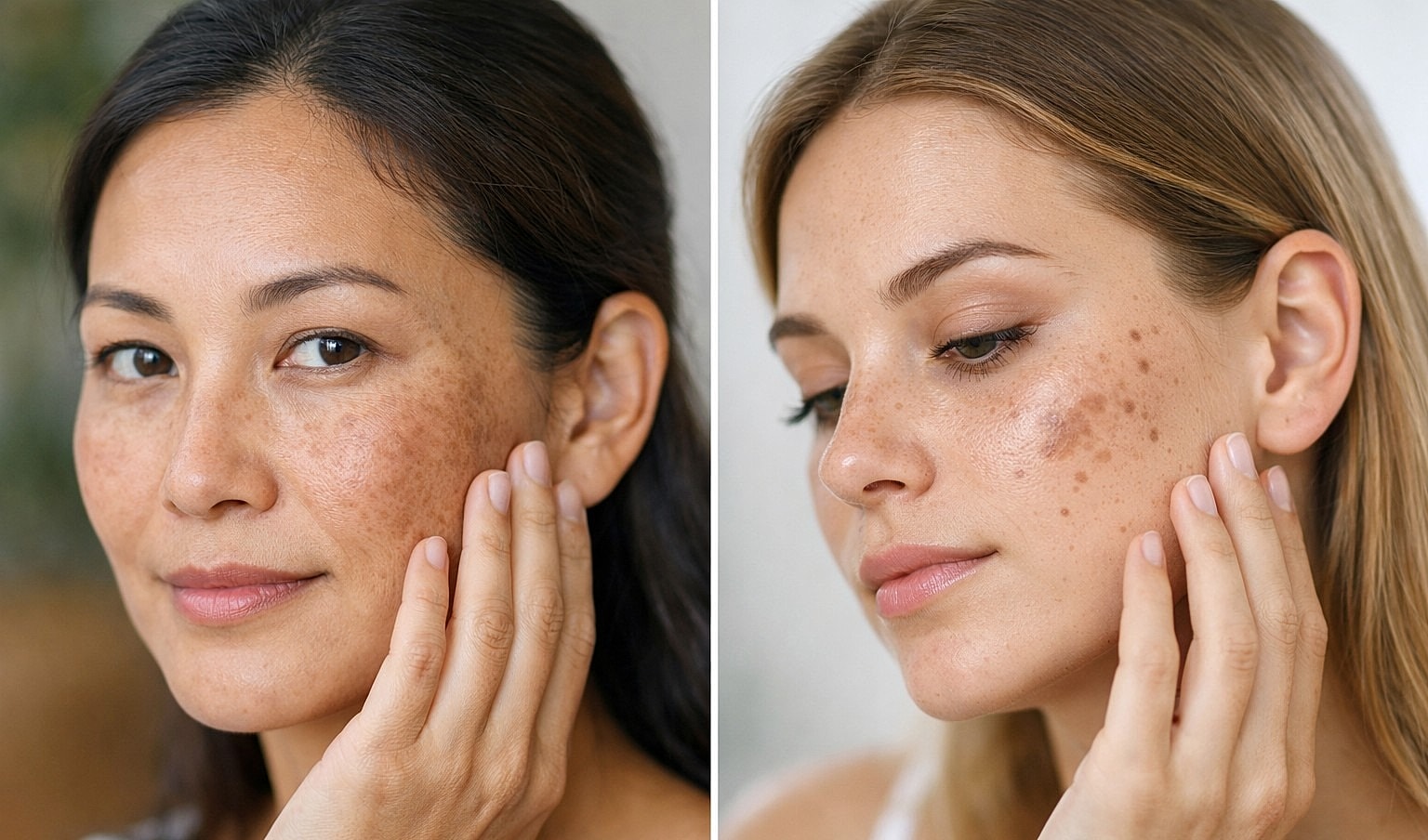
The primary difference between melasma and hyperpigmentation is that hyperpigmentation is a broad umbrella term for any skin darkening caused by excess melanin production, whereas melasma is a specific, chronic pigmentation disorder often triggered by hormonal shifts. While standard hyperpigmentation like sunspots or acne scars usually responds predictably to topical treatments, melasma is deeper, more complex, and frequently recurs due to internal biological triggers.
In the high-altitude climate of Boulder, Colorado, where UV exposure damage is intensified, distinguishing between these two conditions is essential for effective treatment. Treating melasma as if it were standard sun damage can sometimes worsen the condition, especially if heat-based lasers are used incorrectly.
"Understanding the underlying trigger—whether it is hormonal, inflammatory, or environmental—is the single most important factor in successfully managing facial pigment." — Clinical Dermatology Perspective
To effectively clear the skin, one must understand that "hyperpigmentation" describes the symptom, while "melasma" describes a specific condition.
The reason for hyperpigmentation is generally external. When the skin suffers an inflammatory skin response, such as a scrape, a pimple, or excessive sun exposure, it produces extra melanin to protect itself. This results in localized dark spots.
Conversely, melasma is driven by a combination of internal and external factors. While UV rays play a role, estrogen-related pigmentation is a hallmark of melasma. It is also uniquely sensitive to heat; heat-triggered pigmentation means that even a hot sauna or a workout can darken melasma patches, even without direct sun exposure.
Whether a dark spot is "permanent" often depends on epidermal vs. dermal pigmentation.
Hyperpigmentation that sits in the epidermis (the top layer of skin) is usually temporary and fades as cells turn over. However, melasma can involve the dermis (the deeper layer), making it a "chronic" condition. While you can achieve significant clearance, melasma requires ongoing management of the skin barrier health to prevent flares. What is Melasma recovery looks different for everyone, but with the right protocol, it can be controlled indefinitely.
Treating skin in Colorado requires a specialized approach due to our 5,300+ feet of elevation. The thinner atmosphere means less protection from the sun, leading to frequent sun-induced dark spots.
When considering which treatment is good for hyperpigmentation, options often include:
For melasma, the approach must be gentler. Because melasma is heat-sensitive, aggressive high-heat lasers can backfire. Professional providers focus on calming the melanocytes rather than just "burning" the spots away. You can find more specific tips to get rid of melasma by focusing on cooling treatments and high-quality SPF. Also learn, why melasma develops on the face.
If your dark spots are changing shape, appearing symmetrically, or failing to respond to over-the-counter brighteners, it is time for a professional assessment to learn about hyperpigmentation and how it differs from other skin conditions. A specialist will evaluate your Fitzpatrick skin type to determine which ingredients are safe for your specific tone. Darker skin types, for instance, are more prone to PIH if treated too aggressively.
Distinguishing between these conditions is the first step toward achieving clear skin. While hyperpigmentation is often a straightforward result of past damage, melasma is a complex, ongoing dialogue between your hormones and the environment. Especially in the intense Colorado sun, professional guidance is the safest way to ensure you don't accidentally worsen your condition with the wrong products.
As a leading provider of clinical skincare in the region, Boulder Skin Bar offers customized protocols to address both epidermal and dermal concerns. If you are ready to even out your skin tone, we invite you to request a consultation to receive a personalized skin analysis, or you can contact us with any specific questions regarding our technology. To start your journey toward a brighter complexion today, book now and gain a better understanding of the difference between melasma and hyperpigmentation.
Melasma can sometimes fade on its own if the trigger is removed, such as after pregnancy or after discontinuing certain medications. However, for many, it remains a chronic condition that requires professional intervention and strict sun protection to manage effectively.
Melasma is more complex because it involves systemic factors like hormones and heat sensitivity, rather than just surface damage. Because the pigment can reside in both the epidermal and dermal layers, it requires a more nuanced, long-term strategy compared to standard sunspots.
Yes. In Boulder, the UV index is significantly higher due to the altitude. Intense UV exposure triggers melanocytes to produce more pigment instantly. Consistent, broad-spectrum physical sunscreen is mandatory for anyone in Colorado dealing with facial pigmentation.
There is no "one size fits all," but many experts prefer a combination of superficial chemical peels, low-energy laser toning, and medical-grade topical lighteners. The goal is to suppress pigment production without generating excessive heat that could trigger a flare.
Yes, certain chemical peels are highly effective. However, they must be chosen carefully based on your skin type. Correctly formulated peels can exfoliate existing pigment and help stabilize the skin's pigment-producing cells.
Most hyperpigmentation is not permanent. With consistent exfoliation, sun protection, and professional treatments, most sun-induced dark spots and acne scars will eventually fade or disappear completely.