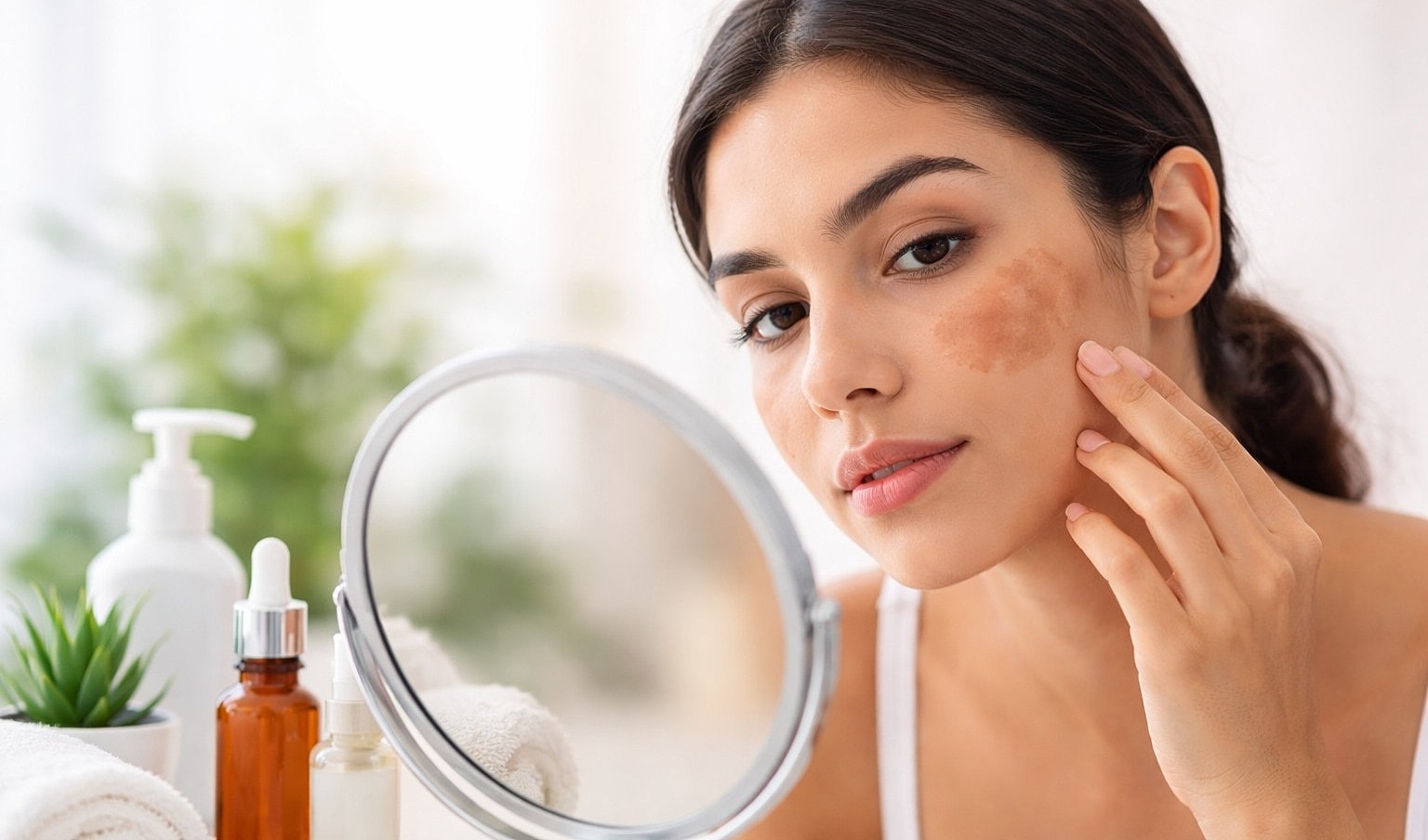
Melasma is not visible immediately. Brown or gray-brown patches on the cheeks or forehead often draw the attention of many people, which later darken after sun exposure or hormonal changes. These spots may gradually spread all over the face and become difficult to lighten. To understand what melasma is, it is important to note that it is a long-term facial pigmentation disorder characterized by brown or gray-brown spots that develop under the skin due to excess accumulation of pigment.
Melasma is not related to temporary discoloration and is likely to recur unless it is treated regularly. Though it is not dangerous to physical health, it can affect overall skin clarity and self-esteem.
Melasma is not only a superficial discoloration, but is related to pigment regulation in the skin.……………………
It is vital to understand how melasma develops and why it does not respond in the same way as other pigmentation issues to be able to deal with it.
Melasma develops due to a combination of both internal and external conditions that affect the synthesis of pigment. To better understand the main causes of melasma, it is important to look at hormonal changes, sun exposure, and genetic predisposition together rather than as isolated triggers.
Hormonal changes (especially in pregnancy, called chloasma) or oral contraceptives can be considered one of the most frequent triggers. Such changes can stimulate melanocytes (pigment-producing cells), which cause excess melanin production in certain areas.
Another key contributor is the sun exposure. The ultraviolet (UV) radiation enhances the activity of melanin and increases the pre-existing pigmentation, turning melasma darker and more persistent. Genetics is also a contributing factor because people with a genetic predisposition may be more prone to the development of melasma, especially when it is combined with sun exposure or a hormonal variation.
Due to the interaction of various triggers, melasma is likely to recur unless it is treated regularly.
Melasma has been classified according to the depth of pigmentation that determines its sensitivity to treatment.
In this type, pigment affects the epidermis of the skin. The patches appear more transparent and can be treated with suitable topical and professional treatments for how to treat melasma on the face naturally.
This type of pigment lies deeper within the skin, which causes discoloration that looks more spread out and is often harder to fade.
It is a type of pigment that is present in the upper and deeper layers of the skin and usually requires a long-term management approach.
Since melasma is a common facial pigmentation condition, it often recurs, but true identification can guide effective care strategies.
Although melasma is a form of pigmentation, it differs from general hyperpigmentation in both its causal mechanism and behavior. Understanding the melasma vs hyperpigmentation differences helps in choosing the correct treatment approach and setting realistic expectations.
Melasma typically recurs, but post-inflammatory hyperpigmentation generally fades naturally. You can learn about hyperpigmentation to know how various pigmentation disorders develop, and also what treatment is best for hyperpigmentation.
Melasma is likely to appear in individuals with some risk factors, such as:
· Women with hormonal changes in pregnancy
· Individuals using oral contraceptives
· Those who have medium to dark skin
· People with a family history of pigmentation
· Individuals who spend a long time in the sun
Although it is less common in men, melasma can still occur, particularly when they are with regular UV.
Melasma is a long-lasting skin disorder that can be managed professionally with ongoing treatment.
Medical-grade skincare supports skin barrier health, melanin production, and assists in inflammation reduction.
These treatments are used to target pigmentation but with minimal interference to the surrounding tissue.
Melasma requires a long-term, medical-grade skincare plan, with certain precautions. Strict UV radiation protection and maintenance measures are usually combined with professional treatments in order to minimize recurring pigmentation.
At Boulder Skin Bar, the treatment of melasma is based on a medical aesthetics assessment, rather than a one-time cosmetic treatment.
Laser treatment can be useful to some people, but it should be approached with caution to avoid recurrent pigmentation. The skin affected by melasma is heat-sensitive and inflammatory, and improper application of the laser can increase pigmentation. A professional evaluation is a must-have before considering laser skin rejuvenation to determine suitability, treatment settings, and supportive care required for safe outcomes.
Melasma needs a medical-grade skincare plan that is long-term, but with some precautions. However, it usually recurs since the underlying causes are active. To manage pigmentation and reduce recurrence chances, regular skincare, the use of sunscreen, and professional assistance are generally required.
Understanding what melasma is helps people to handle the disorder in an efficient way. Melasma develops due to both internal and external factors. It is not usually solved instantly but through regular observation. The pigmentation can be cured with the help of adequate diagnosis and a long-term strategic approach.
For personalized guidance on melasma management, you may Contact Us at Boulder Skin Bar, Request a Consultation, or Book Now to discover professional treatment options.
Melasma is not associated with any vitamin deficiency; it occurs mainly because of hormonal changes, exposure to the sun, and genetic factors.
No. Melasma is a specific pigmentation disorder that is subject to both hormonal and ultraviolet radiation.
Melasma is a chronic skin condition, and it may fade with proper care, but may occur again with increased sun exposure or hormonal fluctuation.
Melasma is controlled using medical-grade skincare, daily sun protection, and professional treatments, which vary depending on the severity of pigmentation.
Yes. The greatest trigger of darkening and recurrence of melasma is UV radiation.
If pigmentation continues, goes significantly darker, or starts affecting your confidence, consult a specialist and work out the proper management strategy.