Published May 21, 2026
6 minute read
Aerolase and traditional lasers both aim to improve hyperpigmentation, but they work differently when it comes to skin sensitivity, downtime, and treatment intensity. Many people looking for pigmentation treatments want visible improvement without triggering additional irritation or extended recovery.
Hyperpigmentation can become frustrating when dark spots remain visible despite using skincare products for months. At Boulder Skin Bar, many clients searching for advanced pigmentation treatments want a safer and more manageable approach that improves uneven skin tone without creating unnecessary stress on the skin. Understanding how Aerolase compares to traditional laser treatments can help you choose the option that fits your skin goals more effectively.
What Is Hyperpigmentation?
Hyperpigmentation is a skin condition that causes certain areas of the skin to appear darker than the surrounding tone due to excess melanin production. It may develop from acne, inflammation, sun exposure, hormonal changes, or skin irritation.
Some pigmentation sits close to the surface, while deeper discoloration can become more difficult to treat. Conditions like melasma and post-inflammatory hyperpigmentation often require professional treatment because over-the-counter products may not deliver noticeable long-term improvement.
How Do Traditional Lasers Treat Hyperpigmentation?
Traditional laser treatments use concentrated light energy to target pigment beneath the skin. Some lasers remove the outer skin layer while others focus on heating deeper tissue to break down excess melanin.
These treatments can improve pigmentation, but they may also create more surface irritation and longer recovery depending on the laser type. Redness, peeling, and temporary sensitivity are common after stronger resurfacing procedures, especially for individuals with sensitive skin.
What Is Aerolase And How Does It Work?
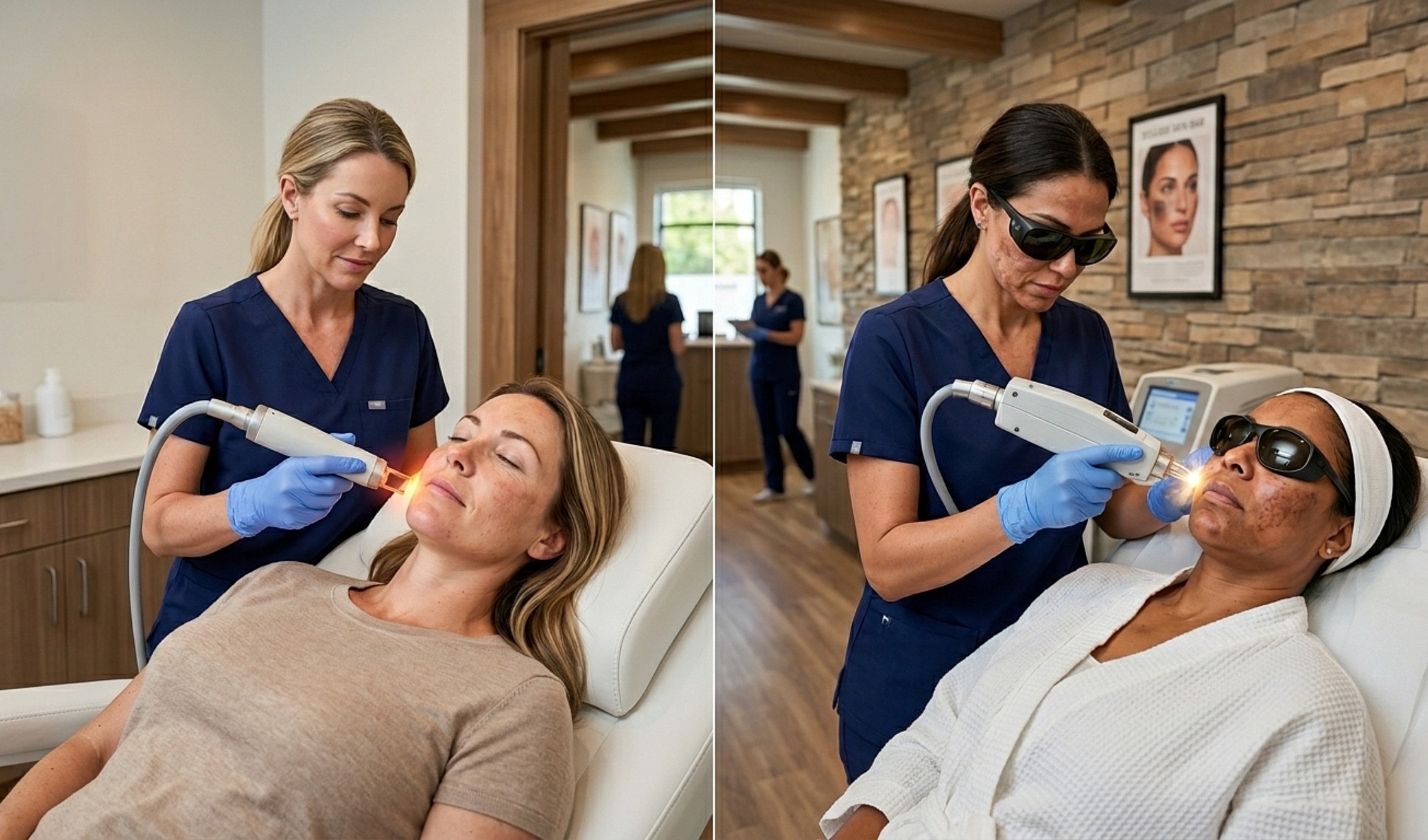
Aerolase is a laser treatment designed to target pigmentation while minimizing excessive surface heat and irritation. It uses short pulses of laser energy to penetrate deeper layers of the skin where excess pigment develops.
Instead of aggressively resurfacing the skin, Aerolase focuses on supporting healthier skin renewal while gradually improving discoloration. This gentler treatment approach is one reason many individuals choose it for managing pigmentation concerns more comfortably.
What Makes Aerolase Different From Traditional Lasers?
Aerolase differs from many traditional lasers because it minimizes surface trauma while still targeting deeper pigmentation. This can help reduce irritation and recovery time for many skin types.
- Uses shorter pulses to minimize surface heat
- Helps reduce downtime after treatment
- Suitable for multiple skin tones and sensitivities
- Targets pigmentation beneath the skin surface
- Supports gradual and balanced skin improvement
Which Treatment Has Less Downtime?
Aerolase generally involves less downtime compared to many traditional laser treatments. Most individuals experience only mild redness that fades relatively quickly after treatment.
Traditional resurfacing lasers often require more recovery time because they create stronger surface disruption. Peeling, sensitivity, and visible redness may last several days depending on the treatment intensity. Many people choose Aerolase because it fits more easily into their regular schedule.
Which Option Is Better For Sensitive Skin?
People with sensitive skin often worry about irritation, inflammation, or worsening pigmentation after laser procedures. Some traditional lasers may create more surface trauma, which can increase sensitivity during healing.
Aerolase is often considered a gentler option because it minimizes excessive heat on the outer skin layer. This may help lower the risk of post-treatment irritation while still supporting pigmentation improvement over time.
Can Aerolase Treat Melasma And Acne Marks?
Yes, Aerolase may help improve several pigmentation concerns, including melasma and post-acne dark spots. The treatment works by targeting deeper pigment while supporting healthier skin turnover and collagen production.
Many individuals dealing with pigmentation also notice uneven texture or redness. Because Aerolase supports overall skin renewal, it may improve multiple concerns simultaneously instead of focusing on only one issue.
Do Traditional Lasers Deliver Faster Results?
Traditional lasers may produce more dramatic short-term resurfacing results because they often use stronger treatment intensity. Some individuals notice visible peeling and brighter skin relatively quickly after recovery.
Aerolase focuses more on gradual improvement with reduced irritation. While the changes may appear more progressive, many people prefer this balanced approach because it minimizes recovery stress and supports long-term skin stability.
Which Laser Treatment Is Safer For Different Skin Tones?
Laser safety can vary depending on skin tone and sensitivity. Some traditional laser systems may increase the risk of post-inflammatory pigmentation in deeper skin tones if excessive heat affects the skin surface.
Aerolase is commonly considered suitable for multiple skin tones because it minimizes unnecessary surface trauma. Personalized treatment planning still remains important because every skin type responds differently to laser procedures.
How Can You Maintain Hyperpigmentation Results?
Maintaining pigmentation improvement requires consistent skincare and sun protection after professional treatments. Sun exposure remains one of the biggest triggers for recurring dark spots and uneven skin tone.
Using sunscreen daily and avoiding excessive heat exposure can help support longer-lasting results. Gentle skincare routines and hydration also help maintain healthier skin between treatment sessions.
Why Is Professional Evaluation Important Before Laser Treatments?
Not all pigmentation concerns respond the same way to treatment. Factors like skin sensitivity, melasma triggers, acne history, and pigmentation depth all influence which laser approach may work best.
At Boulder Skin Bar, treatment plans are customized based on individual skin concerns and long-term goals. This helps create a safer and more balanced approach to pigmentation improvement while reducing unnecessary irritation during recovery.
Which Treatment Is Better Overall?
The best treatment depends on your skin condition, sensitivity level, and treatment goals. Traditional lasers may work well for individuals comfortable with stronger resurfacing and longer downtime.
Aerolase is often preferred by people looking for a gentler option that still improves pigmentation while reducing recovery stress. Many individuals choose it because it balances comfort, convenience, and gradual skin improvement more effectively.
Conclusion
When comparing Aerolase vs traditional lasers for hyperpigmentation, the right choice depends on how your skin responds to treatment and how much downtime you are comfortable managing. Aerolase offers a gentler approach that targets pigmentation while minimizing excessive irritation and recovery time for many individuals.
At Boulder Skin Bar, treatments are designed to support healthier and more even-looking skin through personalized care and advanced laser technology. If you are ready to explore professional pigmentation treatments, Request Consultation or Book Now to find the treatment approach that best fits your skin goals.
Frequently Asked Questions
Aerolase is often preferred by individuals looking for gentler treatment with less downtime. It helps improve pigmentation while minimizing excessive surface irritation during recovery.
Yes, Aerolase may help improve melasma, acne marks, and uneven skin tone by targeting deeper pigmentation beneath the skin while supporting healthier skin renewal.
Aerolase generally involves less downtime than many traditional resurfacing lasers. Most people experience only temporary redness and return to regular activities quickly.
Aerolase is commonly considered suitable for multiple skin tones because it minimizes excessive surface heat that may contribute to post-treatment pigmentation concerns.
The number of sessions depends on pigmentation severity and skin response. Many individuals notice gradual improvement after several consistent treatment sessions.